01 / IMAGE COLLECTION
Image Atlas
231M pretraining cell images across 40 species.
Explore real images Full Image Atlas · available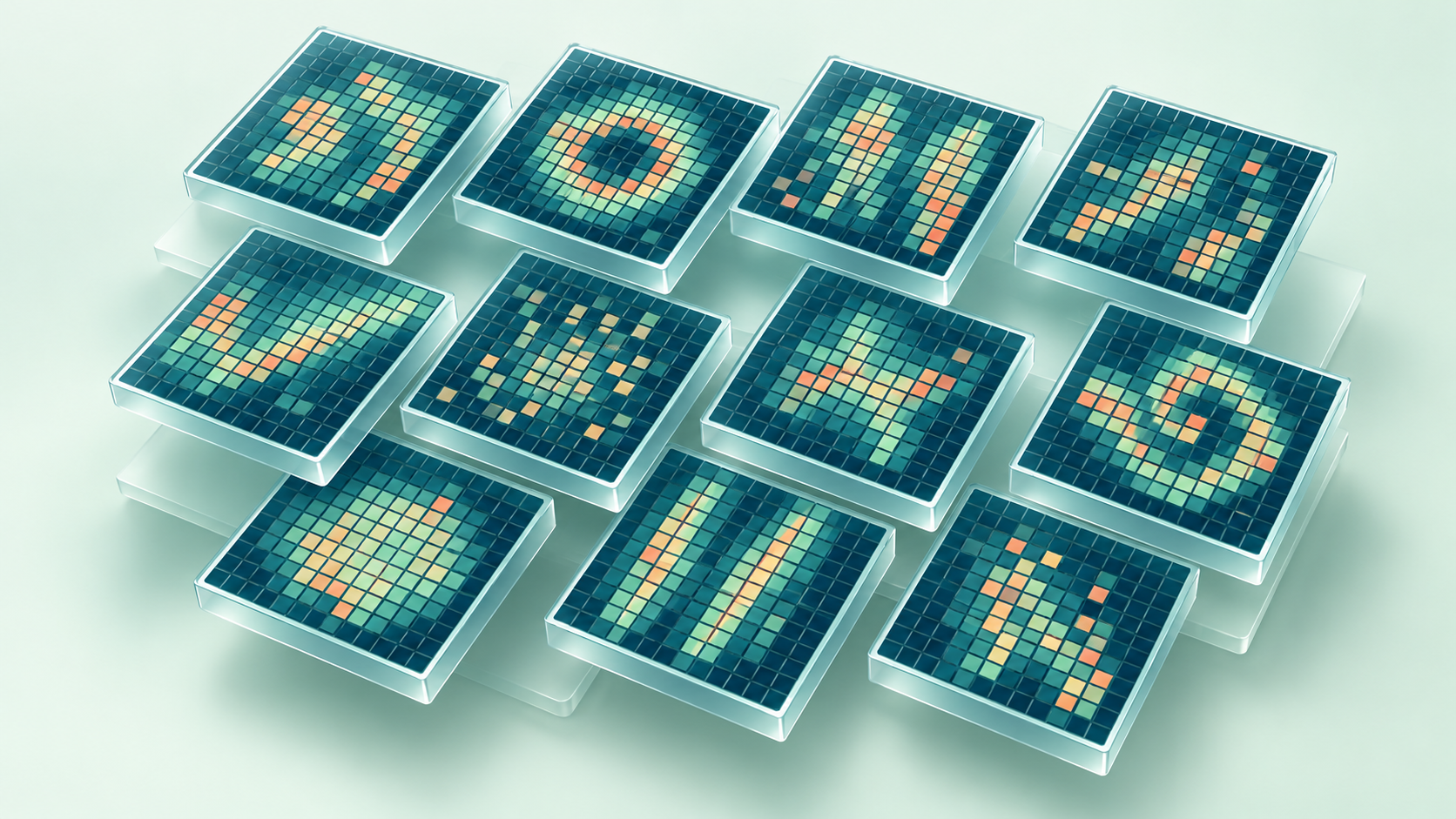

DNA-informed images. Panoramic transcriptome modelling. CellNet brings gene identity and RNA expression together to connect cellular diversity with molecular detail.
231M pretraining cell images across 40 species.
Explore real images Full Image Atlas · available
DNA-informed coding and non-coding genes, in one panoramic cell context.
Model & weights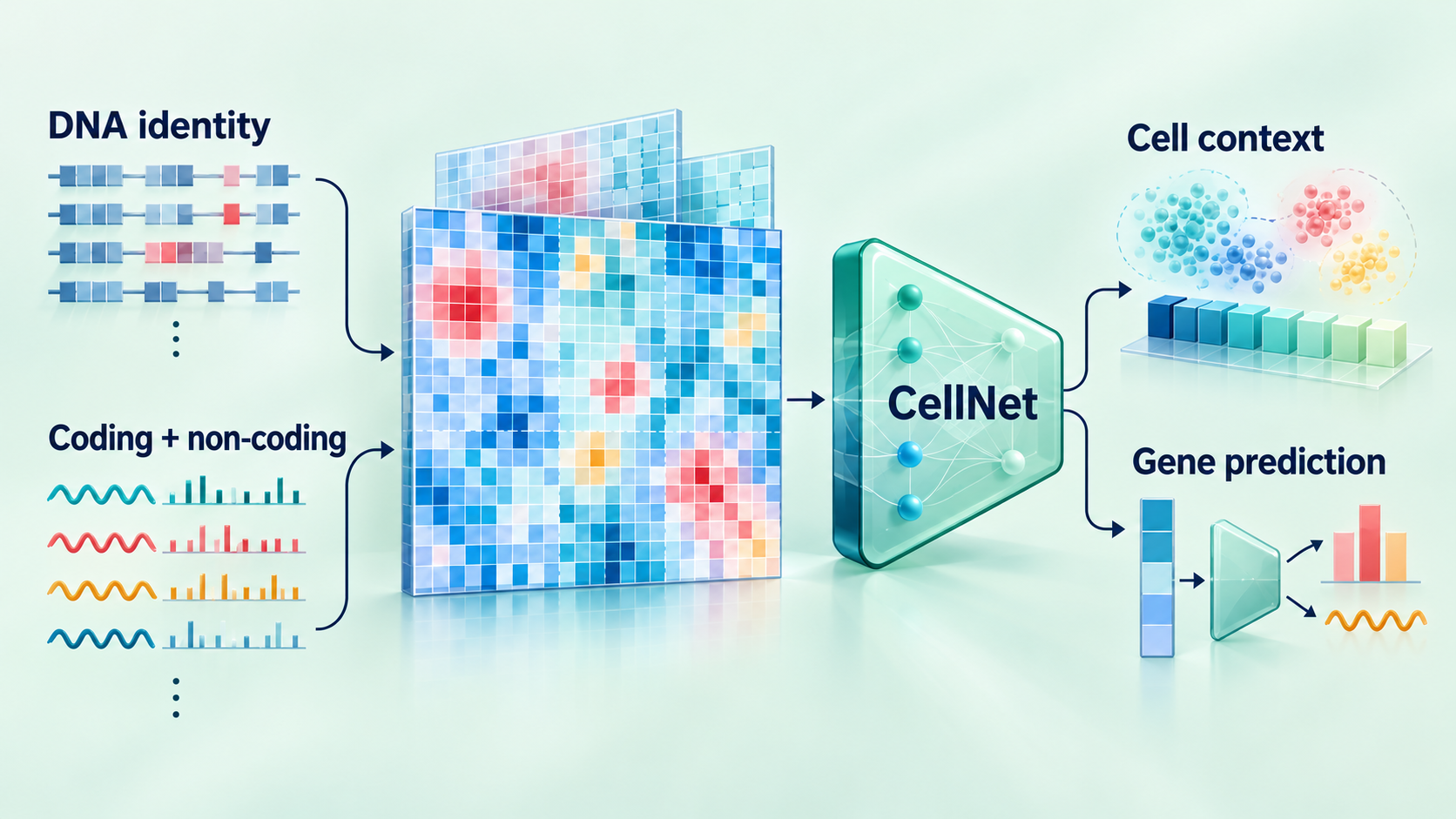
Built for
biology at scale.Pretraining collection
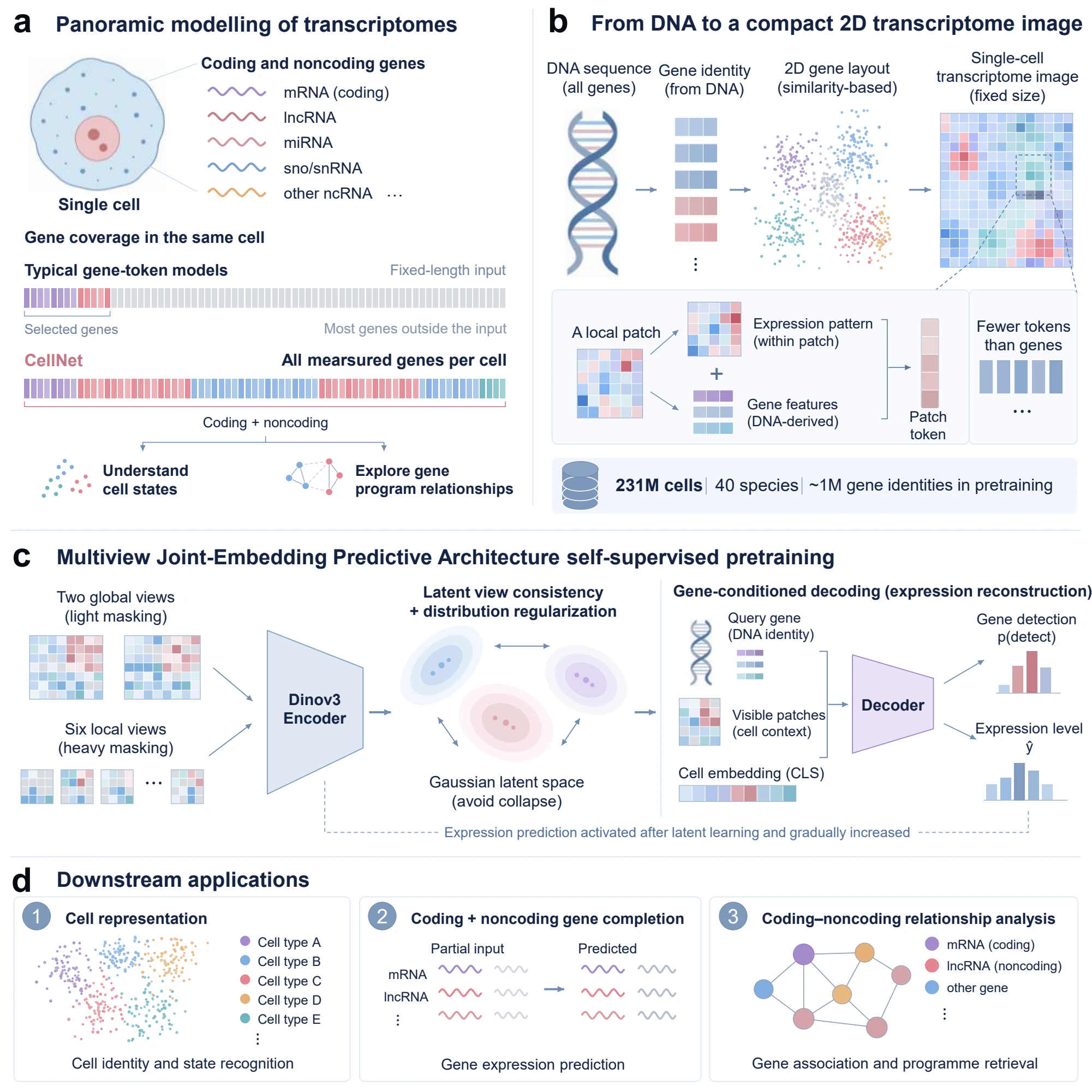
DNA-derived identities extend coverage across coding and non-coding genes. Image patches bring many genes into each token, making panoramic transcriptome modelling computationally practical.
DNA-derived representations describe genes, including those without a protein product, and define a species-specific spatial layout.
Measured RNA expression fills a 384 × 384 canvas. A separate measurement mask preserves the difference between an observed zero and an unmeasured gene.
Multiview latent learning builds cell representations. A gene-conditioned decoder connects that context back to individual gene expression.
Each image is a real single-cell transcriptome, mapped onto its native gene layout. Explore the patterns, then switch to the measurement mask to see which genes were observed.
Loading real transcriptome images…
Expression uses the magma colormap with display gamma 0.25; the mask shows measured genes in gold. Select any cell to inspect both views and the original linear rendering.
One framework for studying which cells are present, how they differ, and what their genes reveal. Explore the applications evaluated in the CellNet manuscript.
CellNet supports cell annotation, reference mapping and integration, with evaluations of rare populations and condition-associated states.
Donor-disjoint evaluation, reported separately for the kidney and lung cohorts.
Explore Figure 2 ↗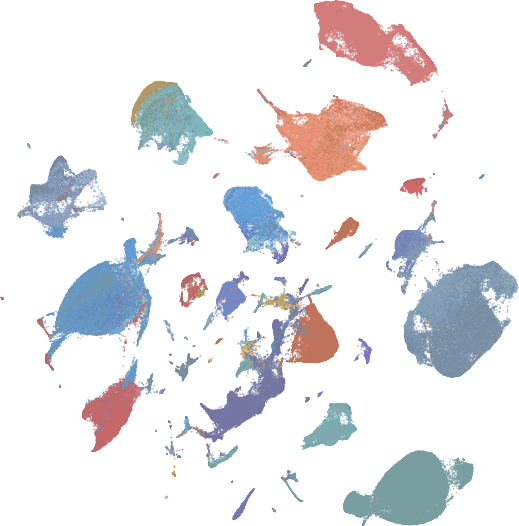
Expression prediction extends biological exploration beyond the genes captured by an assay. From coding genes to selected non-coding transcripts, CellNet enables the study of unmeasured expression in cell states and spatial patterns.
Explore Figure 3 ↗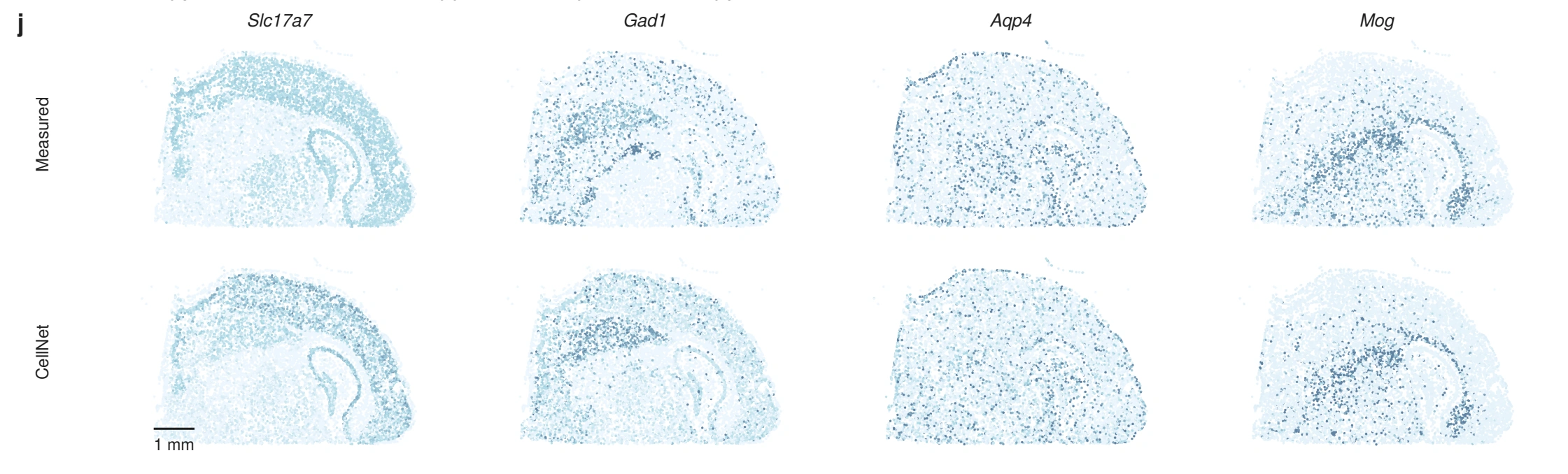
Use non-coding RNA as a starting point to retrieve associated gene programmes. Connect underexplored transcripts to developmental and neural biology through cellular context.
Try the association example ↗Start with the code, explore real examples, or download the full Image Atlas.
Model weights, fitted layouts, inference tools and runnable task examples in one repository.
Python ≥ 3.10 · Git LFS · Apache-2.0 codeOpen GitHub ↗24 real cells from three species, with expression arrays, measurement masks, gene identities and a file catalog.
24 cells · 3 species · ZIP · ≈ 8.74 MiBDownload the example ↓Download the full Image Atlas, measurement masks and fitted gene-to-image maps, with a step-by-step setup guide.
231M cell images · 40 speciesDownload Image Atlas · code: xabe ↗Install Git LFS first. The repository includes weights and fitted assets; the Python wheel contains code.
Read the quick start ↗# Clone code, weights and fitted layouts
git lfs install
git clone https://github.com/daydayup-xq/CellNet.git
cd CellNet
git lfs pull
pip install -e '.[h5ad]'* Equal contribution · arXiv:2610.21943